Tuesday, 14 May 2013

Goodnight and Good Luck

Goodnight and Good Luck

     So it's hello to everyone on a sunny Wednesday morning in Cork. Phew, it's so much easier getting up when it's light. No more stumbling around in the dark.

     For various technical reasons I'm going to have to shut down this blog. It's been wonderful writing my thoughts on here. These pages have been a wonderful prelude to what I now hope will be an extension of my meditational writing and thoughts. 

     Please feel free to continue to follow these posts which will continue in my new blog Jools in Cork.

     Namaste.................................................

Monday, 13 May 2013

Hot Emotions and Burning to Change

Carrying the Torch

     Fire is one of the elements that conjures the most fear. It burns and kills. It destroys and can rage out of control. In so many ways its destructive qualities are so much greater than its positive properties of warmth and comfort. In the time of the sailing ships a fire on board was one of the greatest enemies to the sailor. Yet a fire of some sort always had to be carried either for cooking or firing artillery. As the source of heat for cooking it was treated with the greatest of respect and confined in specially built sand filled containers (1).

     We don't have the same kind of complications today but the significance of fire as a dangerous but precious thing still exists. Fire can be a negative thing when we "carry a torch" for someone. So many Elizabethan madrigals complain of unrequited love by "burning" for a beautiful lady. But fire also has a cleansing and ritualistic significance.

     In this post I look at how fire can be a very powerful transformational tool.


No Smoke without Fire


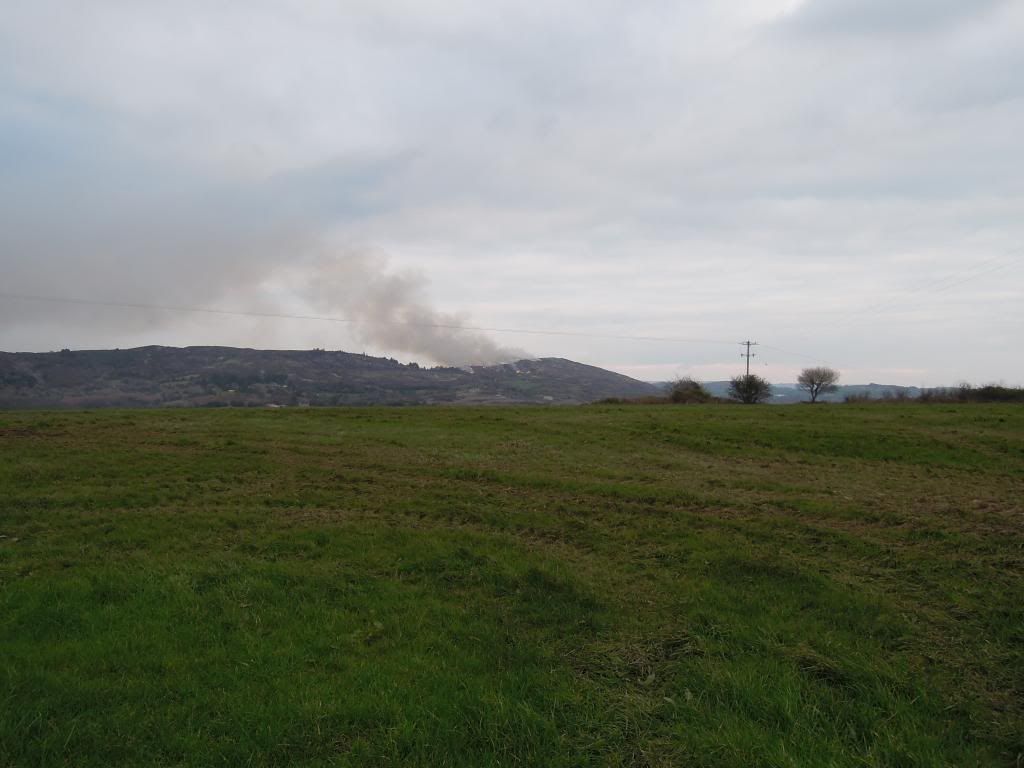
     Controlled fires are used to clear areas of forestry and return valuable nutrients to the ground. If you're not used to seeing this it can be quite a shock at first. Wandering over Ireland's countryside at times when the forestry fires are burning conjures up images of a medieval landscape. I had to be assured by a local farmer that this was quite normal and, in fact, a good thing! The farmer only seemed mildly troubled when I lent him my binoculars and he was able to watch the figures running around the fire in an animated state.

     In a painful reminder of the dangers of fire, the headlines confirmed the next day that the fire had indeed run out of control and threatened a few villages with annihilation. The imagery was very vivid and just reminded me that when something burns the process results in a transformation to rising smoke and charred remains. Even today it's a very real danger.

     In the context of a controlled forest or farming fire, however, the smoke itself is symbolic of something unwanted being carried away. We can use that symbolism to release ourselves from unwanted feelings of resentment or emotions.


Home is where the Hearth Is

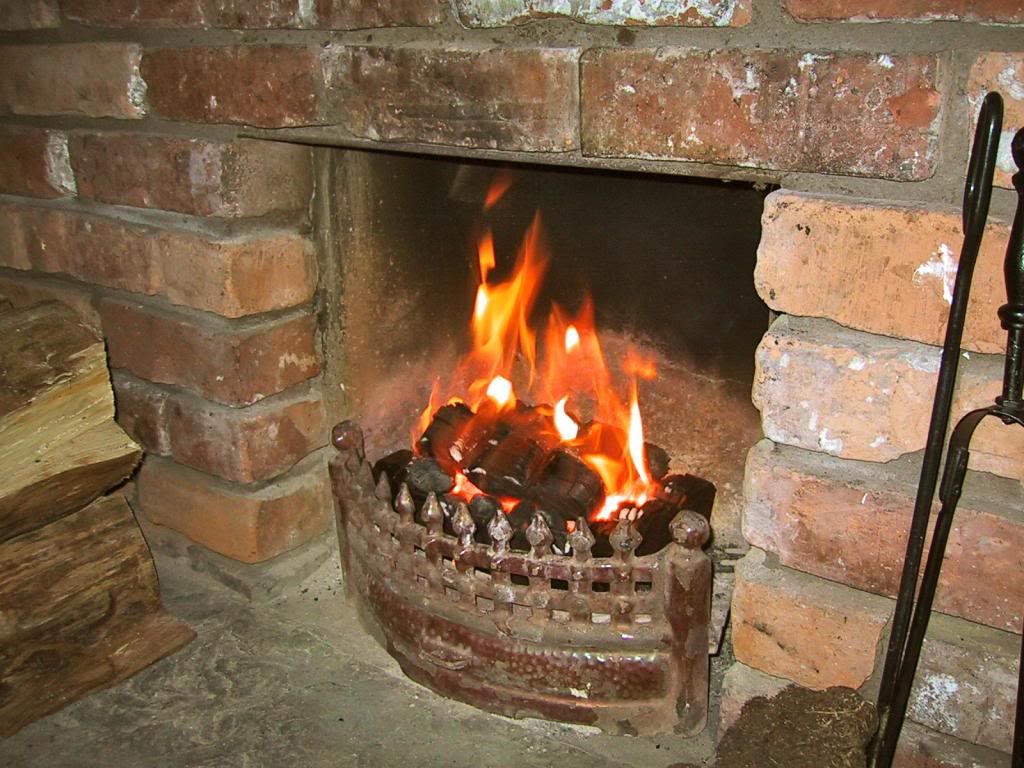
     It's actually very positive to see a real fire burning in a hearth. The hearth used to represent the beating heart of a house and, just like the cooking fires on board ship, as long as it's kept under control it's unlikely to create any disasters! If you've ever sat in front of a burning fireplace and watched the flames then you'll know what a comforting experience it can be.


     The symbolism of the fire can be taken further. It's important to tend the fire and keep it burning and it's also important to tend our inner fire. Whether it burns with passion or frustration, we need to pay attention and react to that energy. In the same way that we can stoke the fire with the poker and built it up with logs or coal we can change the type of fire that builds within us.


Burning Bridges

     If that fire within is troubling us then it's time to move on. When we make that decision to move that means there's no going back. We simply have to eliminate any chance that the fire can reignite. NLP has lots of tricks to help us deal with negative inner emotions or hallucinations. When perform a real physical act the effect is even stronger.

     This will work with any burden or troubling thought but take sadness after a failed relationship, for example. Those feelings of resentment and rejection can hang around for a very long time. What if it were possible to destroy them? Well it is.

     By taking a piece of paper and writing down what it is that you feel there's a release simply by transferring it to the paper. Be as detailed as you can. Be as honest as you can. Nobody is ever going to read this! Keep writing until you feel the burden released from your shoulders.

     If you want to add emphasis you can screw up that bit of paper or tear it into little bits. Finally, toss it into the fire with the contempt it deserves. If you haven't got a real fire then put it in a bowl and burn it with a match. Take the greatest pleasure in watching it curl up and disintegrate in front of your eyes. Feel the relief as it transforms to smoke and drifts away. Enjoy it!


Walking on Air

    That burden is literally gone. It's been carried away in the smoke. All that remains is the ash. After seeing it transform to smoke we can continue on our path with a fresh outlook on life, as if we're able to walk on air. It'll work for anything: a negative thought or emotion; a feeling of panic or fear; feelings of resentment, anger or jealousy. You can even do the exercise entirely in your head. Fire is such a powerful and meaningful thing to us that the symbolism of burning whatever it is makes a permanent change. Life will never be the same again.

1. http://www.norwayheritage.com/provisions.htm

You can also follow me on Facebook at Feeling Sounds.

Sunday, 12 May 2013

I Like Driving in my Car - Developing Conscious Car-ma!

Keep in Line with your Thoughts

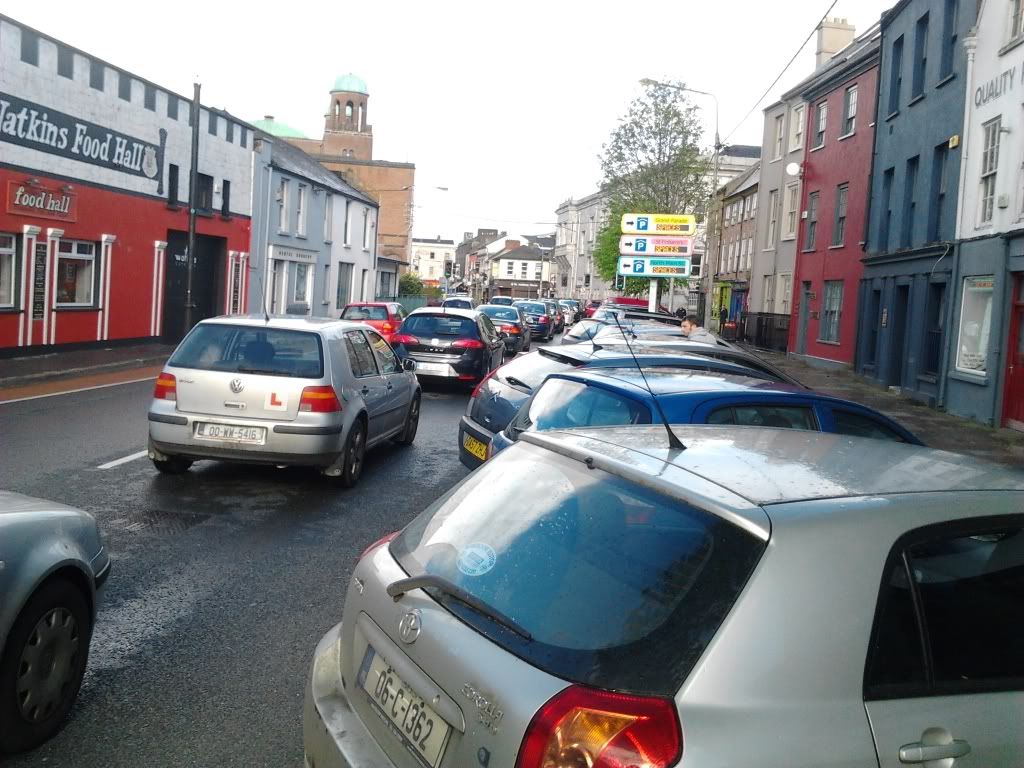
     It can be hard to enjoy driving in your car when you live in a small town like Cork. There's rarely a day that you won't find the narrow roads clogged with traffic. In a bizarre bit of traffic management planning the traffic signals work in the oddest sequence. If you're waiting in a series of lights, the foremost lights will stay red while all the other sets further back up the line go green. This creates a massive bottleneck and build up of frustration. I've seen more than one or two angry exchanges as cars battle to get their place in the queue at a junction.


     You'd better believe it. If you drive a car in Cork then sooner or later you're going to end up in a traffic jam. So why not enjoy it? It's the perfect opportunity to work on mindfulness. Being kept waiting is one of the best lessons in being present.

Make it Count

     When asked once how I could bear driving in Cork I replied "I make it a meditation!" It became a bit of a joke. Apparently I must be responsible for half the accidents in Cork if I meditate while driving. But you don't have to be unconscious or in a dream like state. You need to find a place of heightened awareness where you're alert to what's going on around you.

     So instead of gnawing at the steering wheel and cursing the driver ahead of you who didn't make it through the green light, why not sit back and take a few deep breaths?


Anything Becomes a Meditation

     Just like the saying, you can't hurry a fine wine, there are some things that we enjoy in life that take time. We just have to accept that we're going to lay it down and have to wait as long as it takes before moving to the next stage.


     Treating any event in life like this changes it from something to endure into something to experience. We can actually learn to enjoy the process of waiting. What happens in the course of time that we're waiting for something like a kettle to boil or a pot of coffee to brew? The first response might be "...nothing...!" But taking this to the tiniest extreme of nerve impulses, thoughts and responses, millions of things happen. Never mind the birds that call or the joist that creaks.


A Stairway to Heaven (or Nirvana)

     It's quite true to say that every journey of a thousand miles starts with a single step. But why would we forget all the steps in between the start and the finish? When I use Tibetan singing bowls to help people relax I'm always mindful of the Buddhist representation of the sound. It reflects life. It comes from nothing, resonates with its surroundings for a short while and then fades away to nothing. To appreciate its meaning I have to be present throughout the entire cycle. The same is true of every event or act in our lives.


     The next time you climb the stairs try making it a meditation. As you take the first step feel the placement of your foot and become aware of the transfer of weight throughout your body. How do you breathe? How do you move? Consciously observe your body travelling to the next point in the journey. What are you thinking? What muscles are you using? Don't worry about your destination. Simply take note of where you are in that moment. There's no hurry.

     Equally, when you read a book why would you want to hurry through the book to reach the end? I often get accused of being a slow reader but if I'm enjoying a good book I like to savour every word. After all, the author took the time to write them. He or she probably agonized over the composition before it finally went to print. So why would I hurry through their labour of passion? I want to enjoy every word. Sometimes I think it's so possible to get lost in a book that you share a piece of the author's creative process. In a way you're sharing their consciousness.


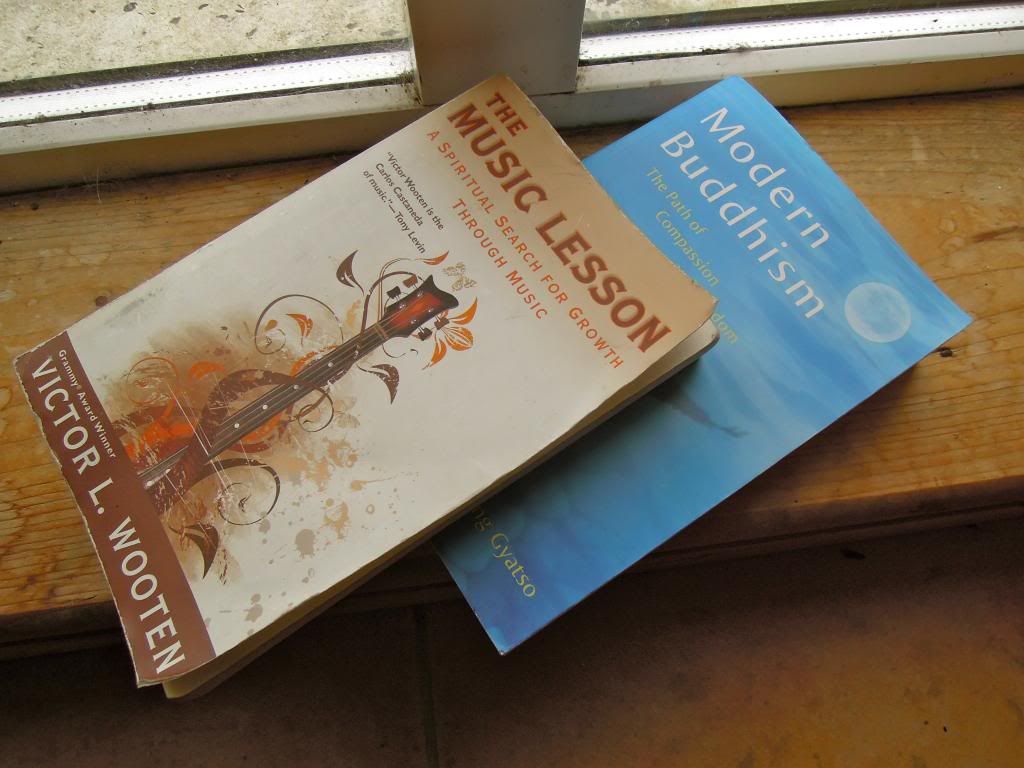
     Many of the spiritual writings around the world and especially in Buddhism are written to be savoured. A buddhist text requires a lot of thought, analysis and digestion. How can we integrate some of the ideology into our lives without taking time to understand it?


Anytime Anyplace Anywhere

     We don't need to sit for hours in a darkened room to develop mindfulness. We can use any event at any time throughout the day to practise being present. Instead of thinking about completing the thing you're doing or planning a later event, be aware of every moment during whatever it is that you're doing.

You can also follow me on Facebook at Feeling Sounds.

Saturday, 11 May 2013

Relax, Take it Easy

Relax, Don't Do It

     Learning to relax and let go is one of the hardest things we have to achieve today. Ironically we find ourselves saying things like we have "to find time" to meditate or "make time" for ourselves or "schedule" some down time.

     In this post I'll be looking at how we can draw inspiration from our surroundings to find the opportunity to stop and use our environment to help de-stress.

Animal Attraction

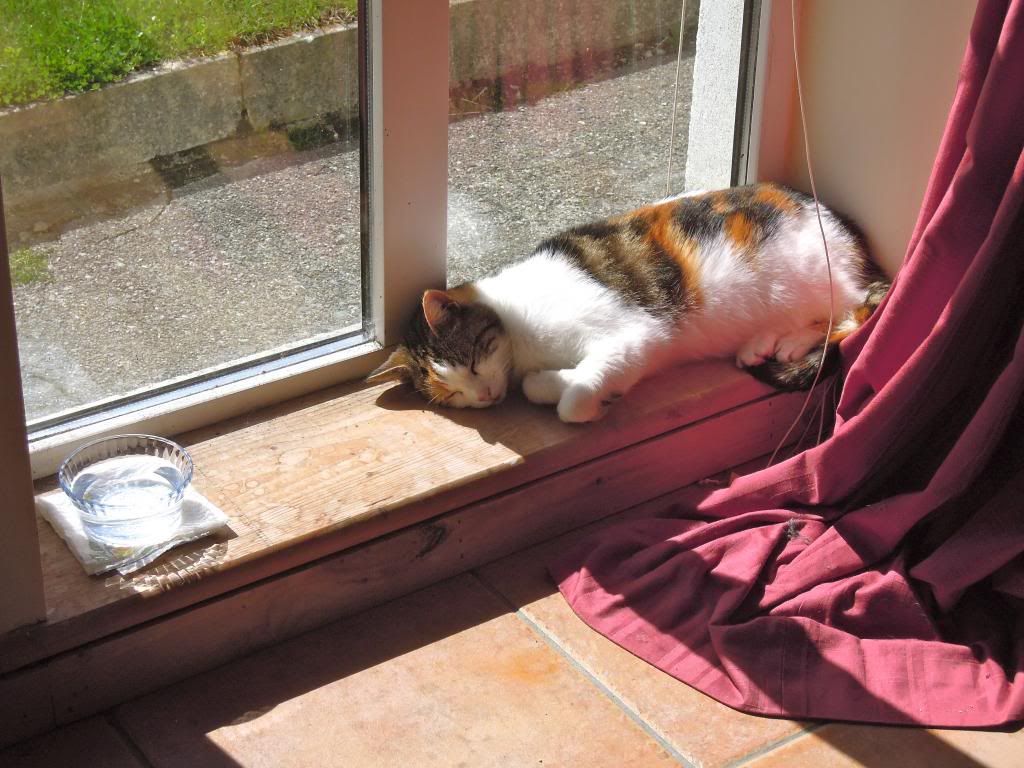
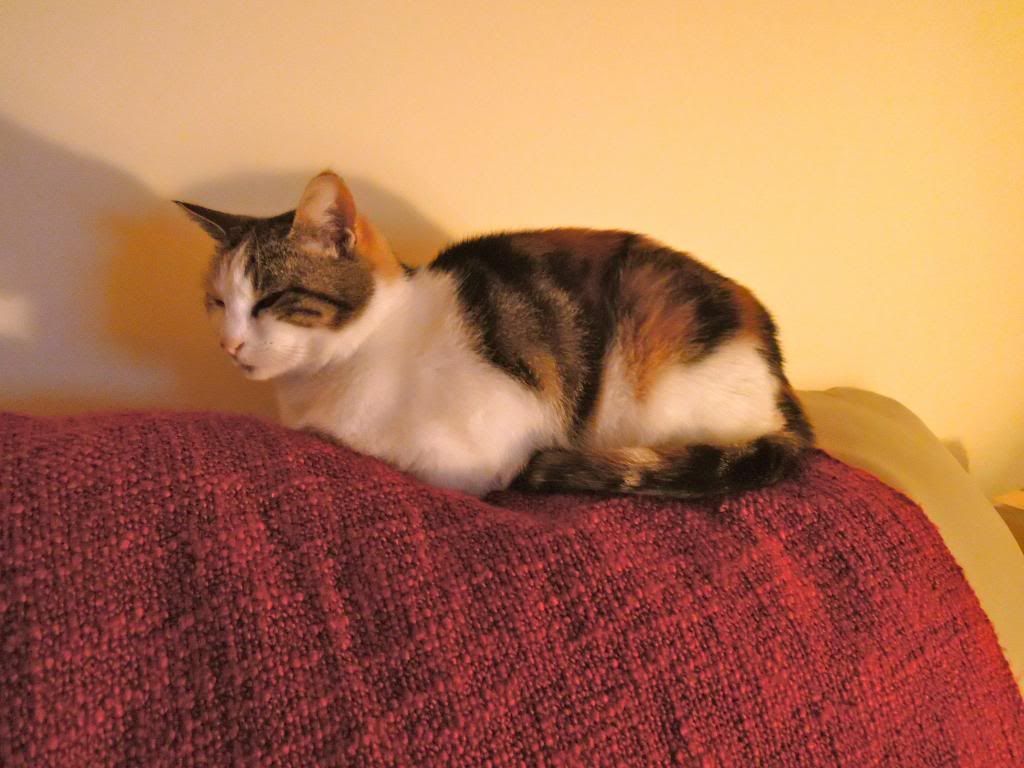
     We have animal companions for all sorts of reasons. Above all it gives us the opportunity to care for another living entity. We like to think we get unconditional love in return but anybody who has ever lived with a cat will know this is not always the case. A cat will, however, give you a great example of how to chill out and relax at the slightest opportunity.


     Even if you live with a cat who wants little physical attention from you, their willingness to flop down in the sun and snooze is a relaxing sight in itself. The bonus is that if you've got the time when you're at home sharing their space, you can synchronize your down time with theirs and take a little nap too.

     The way a cat grabs these opportunities to nap is such a good way to understand that small breaks help us keep stress levels low. If the cat will jump up and sit on you for a few strokes then all the better. It's been scientifically proven that stroking an animal, particularly a purring cat, will lower blood pressure.

It's a Dog's Life

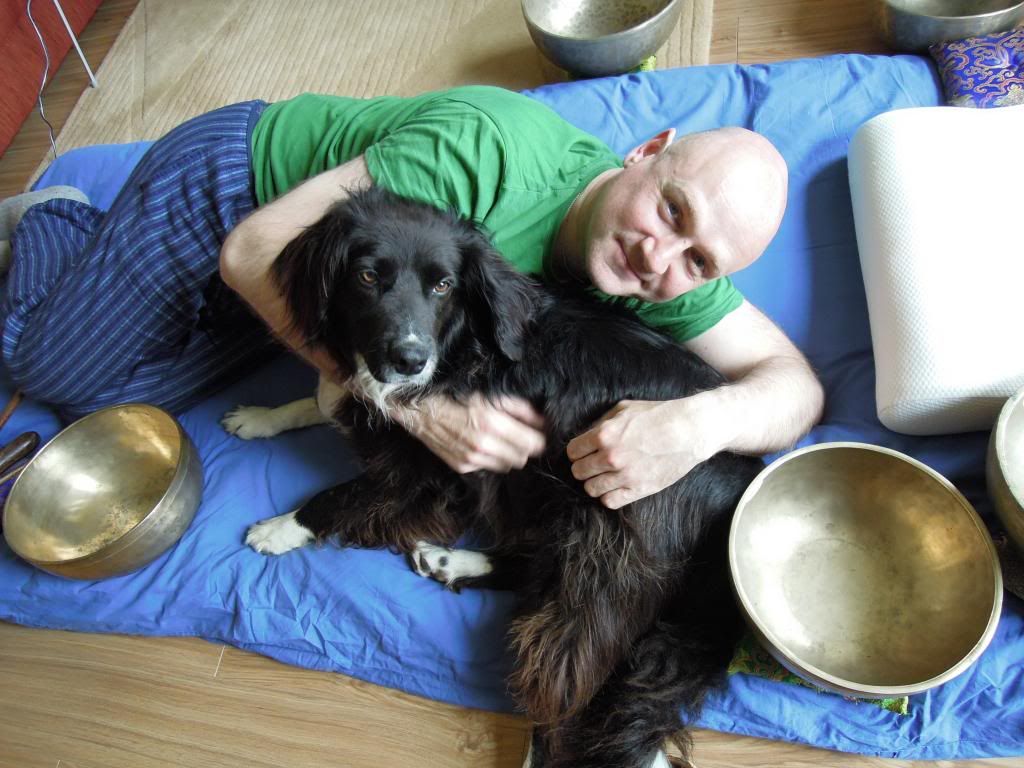
     Dog's are a bit more demanding than cats. Somehow they'll always find a way to end up parked under a hand that may be available to give a few strokes or tickles.


     The added advantage of the dog is that they'll almost certainly always offer you unconditional love. Get the lead from the hook by the door and you'll really see that expressed in a display of excitement and affection. And what a great way to de-stress even more. We now know that the act of walking is a great stress buster and will help us work through mental issues. The fact that the dog prompts us to take a walk is a fantastic opportunity to get out into nature and reconnect with what matters.

Disconnection

     Because our animals have no sense of time or the pressures of a human life, we can disconnect from those same pressures by stepping into their lives. The stress free moments of sitting quietly in a chair and enjoying the sun, stroking a purring cat or walking a faithful dog are no more than a thought away.

    It's no good doing these things and then worrying about the time you're spending doing them. Disconnect from everything else. It pays to practise disconnection in many ways, but meditation and using sounds to clear your mind are two of the best ways to start that process.

Focus on Not Focusing

     That may sound like a bit of a contradiction. To have a clear mind we need to focus our attention on letting go. To relax we have to focus our mind on the parts of our body we want to relax. Our conscious needs to tell our unconscious to let go. We have to give up the idea that we can control everything. We have to learn to focus our attention elsewhere than the the scheduled events of our hectic lives.

     We don't need to be pet owners or animal lovers to enjoy the relaxing effects of an animal's uncomplicated life. If you're in the city look up to the sky and watch the birds. If you're in the country look out at the fields and watch the cows. If all else fails, go to the local aquarium and watch the tropical fish. The energy from their colours will also be pretty amazing!

     Whether we focus on the turmoil of our lives and our problems or whether we clock off for a while (I use that term deliberately) the problems and schedule will still be there after a pause for breath. The difference is that our minds are in a better state to deal with them.

You can also follow me on Facebook at Feeling Sounds.

Thursday, 9 May 2013

What Else Could This Mean?

Quality Questions

     Everything in life is about how we see it. The most impacting thing I was ever told was to consider the quality of the questions you're using to establish the state you're creating. Questions like "Why does this always happen to me?" or "Why am I so unlucky?" don't really serve any purpose.

     We can frame any situation any way we like. Instead of feeling victimized by a partner who returns late from a night out or who inconsiderately doesn't phone to say they'll be late home from work why not ask yourself the question "What else could this mean?"


Life's Dead Ends

     One of the problems with the human condition is we ask ourself questions like "What if..." and "What will happen when..." They're questions that play on the unpredictability of life. Just like a cat interested in a certain smell, we'll irrationally follow that line of thought to its conclusion. Quite often that conclusion will be a dead end. The imagined scene conjured up by the random lottery of thoughts and possible outcomes usually never materializes. We just spend a lot of time worrying about things that never happen.


     To change the question to "What else could this mean?" involves a change of focus. We remove ourselves from the role of victim. Suddenly we're experiencing empathy. If a loved one is late home we can certainly choose to spend a lot of energy thinking about the revenge we'll carry out. Alternatively, we can care about whether they are safe in that moment. The response when your partner gets home will be quite different.

     The question may seem just like another open ended disaster scenario. Its quality lies in its current nature. It doesn't concern itself with imagined future horrors. It sends out an energy in the moment to the one we're thinking about. It reframes our current state.

Jumping to Conclusions

    The idea doesn't only apply to our relationships with people. It also applies to our life situations. Anything can be interpreted as good or bad. It may impact our lives but it's not inherently good or bad in nature. We take the information we're given and make what we want of it.

     I remember at school we had a game of tag which is called "It" in the UK. We modified it for our own fun and played it while hopping. One hell of a fight broke out once when one kid walked up to another who was playing on the swing and invited him to join in the game by asking "Hop It?" Unfortunately, the kid on the swing was having a bad day and misinterpreted the phrase as an order to get off the swing!

     If we're in a nervous or defensive state then we'll interpret the events around us in the same way. I once drove to Devon with my girlfriend to see my brother. After two breakdowns in my little Fiat 126 and a number of hours driving I called my brother to let him know I was running late. Speeding through the back lanes in the dusk I saw a van screaming towards me, hogging the road. I swerved, swore and kept going, in that order.

     A few minutes later I was aware of some headlamps close to my rear bumper. They flashed. I put my foot down and the headlamps raced to keep up with me. They flashed again. "Holy crap!" I said to my girlfriend. "It's that van!" I'd watched the Spielberg film Duel shortly before and imagined myself being hunted down by a madman in a Mitsubishi van with a tinted windscreen.

     Eventually the van overtook me on a straight and I had to accept that the duel was over. This was it. Curtains. The end of the road. Literally! Ignoring the van speeding next to me I put my foot down. My girlfriend touched my arm as she looked out the window at the driver of the van. "It's Tim, your brother!" she said. He'd come out to meet us after hearing of our trouble. His most evil plan was to have a break somewhere together before completing our journey. 

Reframing Events and Situations

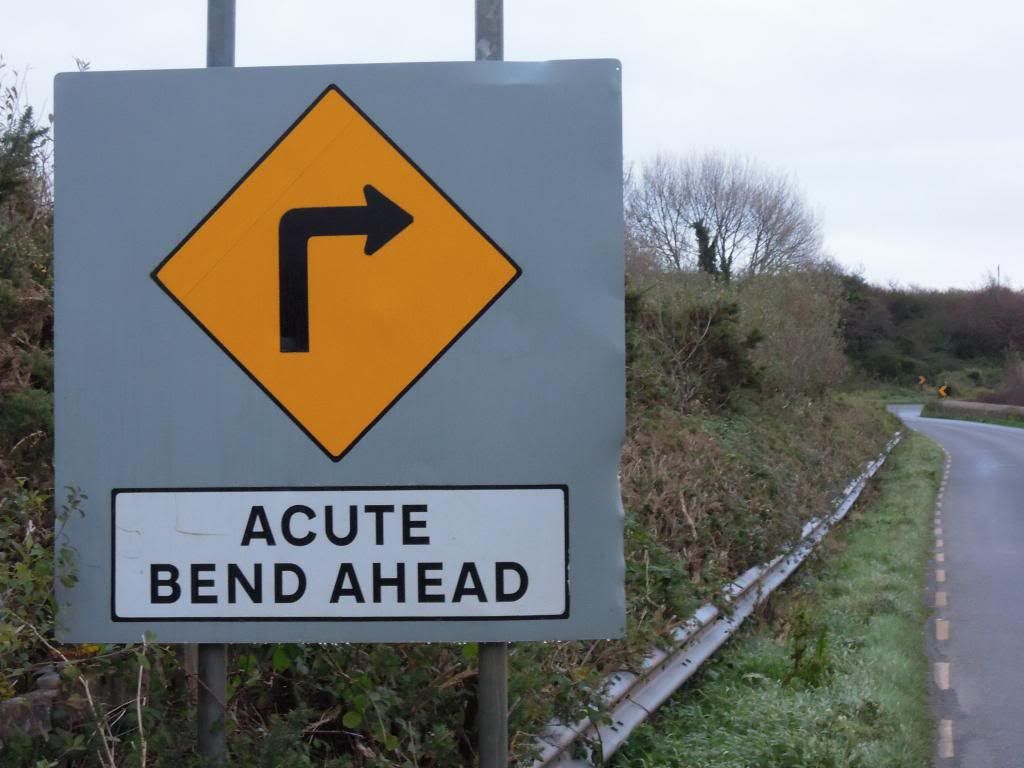
     As I've already said, what we do with the information we receive is entirely up to us. If we hear "acute bend ahead" it can mean that we have to be careful because of a dangerous bend coming up in the road. It can also mean that there's an attractive bit of scenery coming up that happens to be on a bend! It's an extreme example but it illustrates how we can change the meaning. That meaning will prompt our state, our attitude to the bend and our response to what we find. If we believe that there's something attractive about the bend then the chances are that we'll find something attractive when we arrive.

     That applies to any situation in our lives. If you approach a horse or a dog with a sense of fear then it'll react with fear towards you and the likelihood is that you'll end up bitten or kicked. Approach it with confidence and in a relaxed state and you'll find that the animal or situation will respond in kind. An interview panel for a job is just another kind of horse or dog.

     Life is full of acute bends and cute bends. As it twists and turns we can either greet them as obstacles to be overcome or adventures we can learn from. Our inner state needs to be cultivated to create the latter as our natural state. This is why we meditate and use pleasing sounds to create that platform. If we're calm within then we'll create that state without.

     Wouldn't it be wonderful to greet every moment in your life as if it was the greatest? To treat every obstacle in your path as a cute bend in the route you have to take through life? I believe that's possible. All we really need to know is that these are the greatest moments of our lifetimes. And we can cultivate the expectation that life will be full of moments like these.

You can also follow me on Facebook at Feeling Sounds.

Wednesday, 8 May 2013

Jump to It - Motivating with Music

     I recently made a trip to the UK which involved flying from Ireland to Stansted. It's only a short hop between the two countries of Ireland and England but somehow the journey seems to be so much more intricate and troublesome than the equivalent journey I used to make from Germany to the UK. 

     I live about one hour from Cork airport which in itself seems to add a yawning gap onto the start of my travels. I have to get up at around 4am to catch the early flight and this screws up the cat's day. She wanders around me in a daze and, after requesting that I open the front door, she stares at the darkness lurking without and then mews at me resentfully.

   The last time I made this journey she actually left the food untouched that usually causes so much excitement. She silently took up position on the back of the sofa to ignore me and go back to sleep. She didn't even come to see me off as she usually would but just resolutely remained aloof as I collected my bags and made a final check of the house.


     Once I was at the airport there was the usual rigmarole of decanting all my liquids into a see through plastic bag and going through the show trial like escapade of removing my belt, boots, hat and jacket. Having shuffled through the security area like a Guantanamo Bay candidate I started to collect my things. Thank heavens for the genteel lady who gave me a bit of light relief.

     She had allowed her bag to go through the X-ray machine without removing her laptop. It caused a minor blip of excitement in the lives of the security officers who would otherwise no doubt have to endure a seemingly endless day of watching the silhouettes of clean undies pass them by on a TV screen. She was taken to one side and asked why she hadn't removed her laptop to which she innocently replied "It's not a laptop! It's my 'personal computer'!" Bless her!

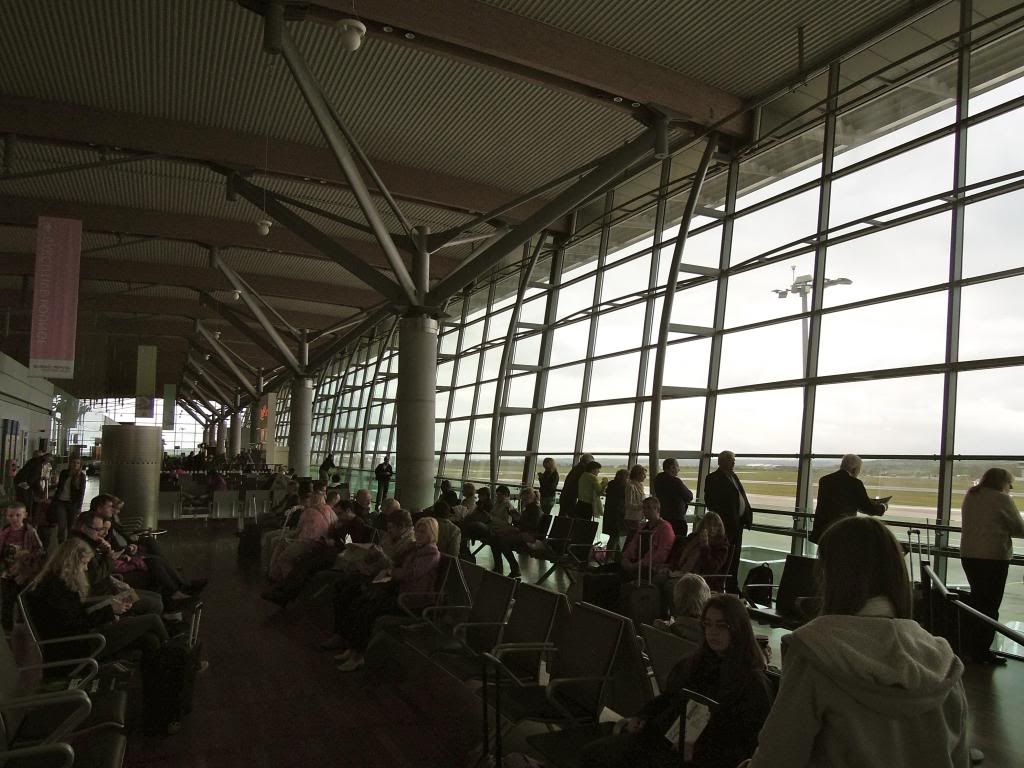
     I'm used to the calming effect of Tibetan singing bowls and I'm lucky enough to work with music to help people relaxi and achieve inner peace. The feeling of lethargy that abounded in the departure lounge harmonized with that ideal. People seemed relaxed  - but there was an edge to the atmosphere that I couldn't quite put my finger on.


     As the allotted time for my flight approached I made a quick trip to the bathroom - I always like to sit by the window on these short journeys and it's such a nuisance to have to squeeze past people if you get caught short during the flight. So I made my way to the nearest gents.

     Sparing the details, I found myself relieved and standing at the wash basin tapping my foot and singing along to the piped music playing in the background. It was van Halen's Jump

     It was irresistible. 

     You just can't help moving to that beat. 

     But what a strange song to be playing in the gents toilet at Cork Airport just before a 8am flight departure! But, actually, no it wasn't. I came out of the toilets with a spring in my step and feeling like I could conquer the world. That's the effect that song has on a lot of people. Just the opening chords with that power synth blazing away are enough to get people up on the dance floor at a wedding disco! Try it yourself. Take a moment to YouTube it and listen...

***

     When I sat down to await the call to the gate I realized that the simply hearing this music had completely changed my state. Imagine if you were nervous of flying and you heard this music. For some people, of course, the association of "jump" with "flying" may not be positive but generally it would have a really positive impact on your consciousness. This is the power of music.

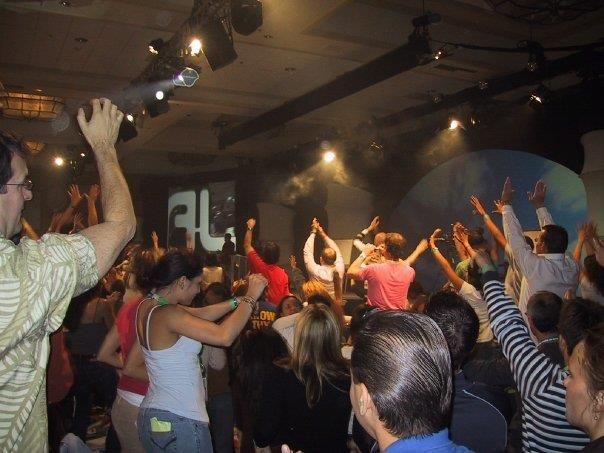
     I've had some opportunities to take part in Tony Robbins seminars and in this environment it's quite usual to identify with certain songs and make them triggers to create a desired state. The same is true if you want to relax. You just need to select the right play list to achieve the state you want.

     One of the trademark characteristic of the Tony Robbins seminars is that they take on the energy and vibrance of a rave. There's a good reason for this. When you're in this hyped up and excited state there are all kinds of receptors firing off in your brain that help you feel positive and make you receptive to learning. It releases the endorphins that make us feel good. Exercise, dancing and jumping up and down will do the same thing. Music, however, is a powerful shortcut to turning on this state altering energy. It's like a drug but it's legal and it's free! Who wouldn't want to get high on feeling good?


     I don't know whether it was a conscious choice of music by the authorities at Cork Airport or whether it was a coincidence that morning but thanks to them the atmosphere at the airport that morning was positive and upbeat. Looking around before departure I believe other people felt it too.

You can follow more of my ramblings on Facebook!

Hypersmash.com

Tuesday, 7 May 2013

Laughter is the Best Medicine


     Isn't it funny how people say that? "Laughter is the best medicine!" Humour is a very human thing and it's a very personal thing. What can be funny to one individual can be a very distasteful subject to another. Seeing Ardal O'Hanlon on stage in Devon back in the 90s was a refreshing experience for me. Whilst so many standup comedians punctuated their entire routines with the coarsest language you could imagine, Ardal O'Hanlon was entertaining theatres full of people with a totally clean act. It just proved that you didn't need to swear in order to engage and shock people with your humour.

     We're also the product of our parents. We attach some importance to the shared bond of a common sense of humour. If we have a fond memory of a funny event or comedic experience then we're likely to gravitate towards that kind of humour. It's why we remember our parents making jokes that made us groan and we subsequently find ourselves making similar jokes that make the next generation shrink away in embarrassment. Don't worry. Their time will come. 

     I am a victim of the Carry On film era. I still love them and they still make me laugh out loud but, I guess, it's primarily because of the memory of sitting with my family and laughing together. The jokes are not really that good but they still raise a satisfying giggle from deep within me. It was a reality shock when I loaned a copy of Carry On Screaming to a friend and she handed it back a week later, puzzled, and told me that she just didn't get it.


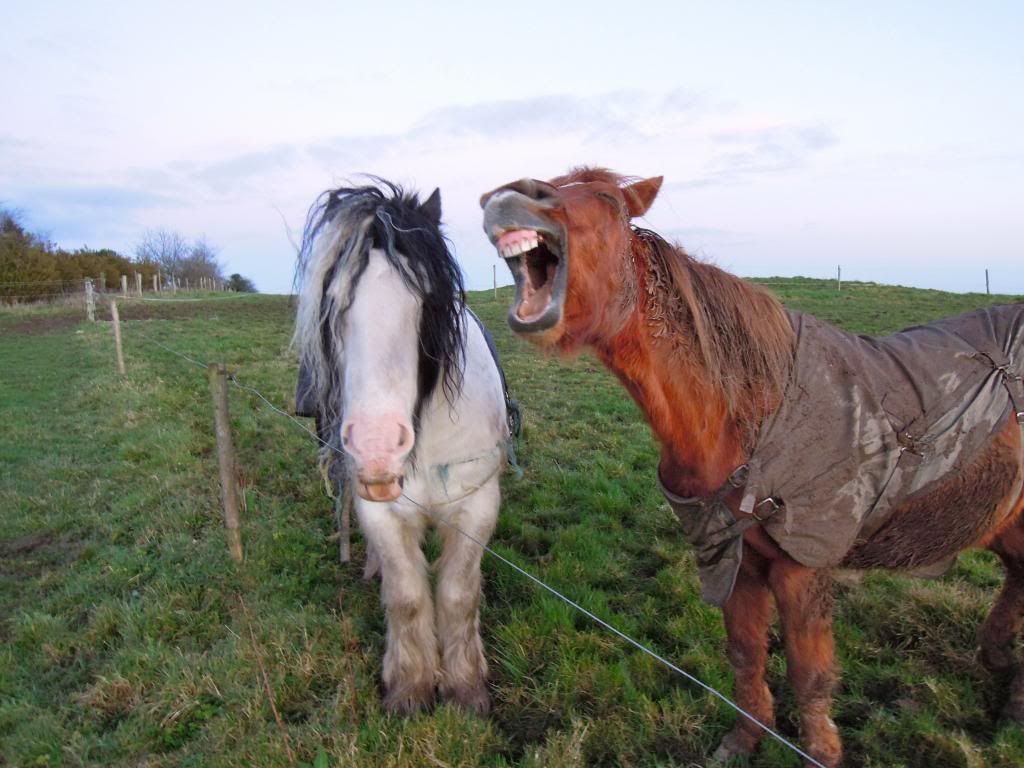
     We might question why laughter is medicine at all. By association, the things that make us laugh are things that we like. We like them because they make us feel good. I have a great affection for and attachment to animals. Although they aren't human and can't possibly relate to me on that level, I feel a bond and do the typically human thing of imposing human characteristics on them. I was in the field with the horses recently and Billy, a lovely 18 year old gent, yawned and whinnied in such a way that I started laughing uncontrollably. He humoured me to the extent that he seemed to join in on a very connected level. I'm not sure what, exactly, but something passed between us and it made me laugh. More than that. It made me feel great!


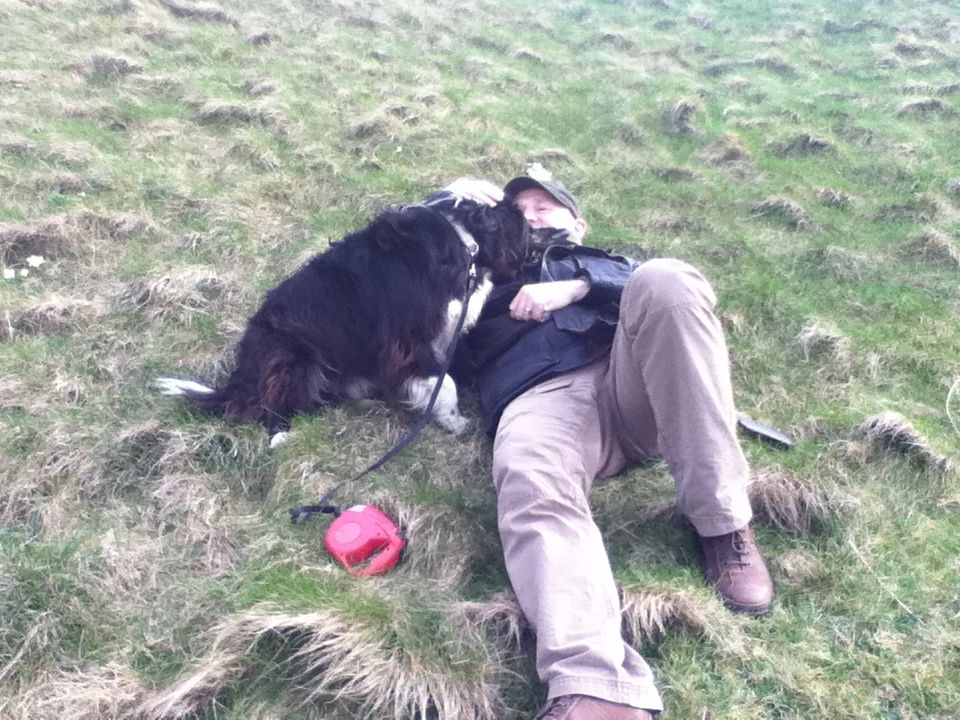
     It's got more to do with the fact that Billy is an animal that I care about that made the episode funnier for me. A similar experience was when I played the concertina recently in Kerry where I have a beautiful partner and an attentive dog companion called Timo. As I played and sang, Timo related in the only way he knew how. He came and sat at a safe distance under the kitchen table and howled along, quite content and undisturbed. In fact, he was so on task that he continued to wail along for a good few minutes after I stopped. His howling made me laugh so much that I was literally crying with laughter by the end. Mrusia, the cat who used to own a fisherman, came and sat at my feet purring! I don't know why she finds the sound of the concertina so reassuring. Maybe her previous human, Pa, played too. The whole comical scene tickled my funny bone so much that it brings a smile to my face even now.


     These things, however, make me feel great. And anything that makes me feel great is good medicine for my body, my mind and therefore by default my soul. It's the same as playing music, meeting friends or walking in nature. The things we enjoy and the things that uplift us are the things we should seek out and do more of.

     Humour and comedy are particularly powerful because they are also so often communal acts. How many times do you watch a funny film or read a funny passage and feel compelled to share it with someone? It's the whole basis on which Facebook exists! Enjoying it in isolation is just not the same. Sharing it is like an outpouring of energy that helps to create the positive vibration. This is an aura that will pervade every level of your life.

     Now that the science surrounding the Laws of Attraction is becoming more common knowledge it should come as no surprise that if we frame our daily experiences with joy and laughter then we'll attract much more of that into our lives. It'll not only help us feel good about our lives but will also help us deal with the ups and downs in a more balanced way.

     The late and great Bill Hicks was a master at imparting this message whilst combining it with his own insightful philosophy on life. I think his message is quite clear. Don't take things too seriously. Love one another. Live in peace and have a laugh.


You can follow more of my ramblings on Facebook!

Monday, 6 May 2013

Not Even Diamonds Are Forever

     However much we remind ourselves of the impermanence of any state, at the back of our minds I wonder whether we really master the ego enough truly to understand that this is the case. I tried this Buddhist exercise the other day. I sat down quietly and told myself that one day this existence will come to an end: in other words, one day I will die. It's a certainty. This is a standard and fairly elementary Buddhist meditation.

     Most westerners who haven't yet come across this form of meditation are squeamish about the thought of sitting face to face with their fear of death and dying. Even the card of "Death" in the Tarot pack has devilish overtones when, in fact, it is a card traditionally associated with change. When we spend time contemplating this, however, there is so much comfort and consolation to be drawn from that thought. Death is just another form of change. 

     Putting aside the "how" for a moment, the thought that everything we experience, acquire, attain or achieve in this existence will one day come to an end puts some perspective on the thought. There is actually nothing we can obtain in this lifetime that we can take with us when we go. Nothing.


     The signs of our attempts to cling onto this existence are all around us. They remain in the form of our buildings, our legacies, our landscapes. But each of these reminders steadily erodes unless they're extensively significant to somebody left behind. Eventually, however, their efforts to preserve the earthly remnants will be in vain because they will die themselves and can only trust that someone following will have a similar interest to preserve the physical objects or even the memories.


     Even the tallest mountain and  the toughest diamond is only in a temporary state and will eventually, over the course of millennia perhaps, change to something unrecognizable. So, the idea that we will cease to exist in any form in this earthly existence starts to have some bearing on the "how". 

     Although we suffer, this is part of the human condition. There is no rational or logical reason why someone suffers. Sometimes illness or misfortune may be the result of an action or a habit such as driving too fast, drinking or smoking and sometimes it can be the result of pure "bad luck", though luck is probably a human superstitious label for the course of good or bad events in life. Ultimately things don't happen "to" us. They just happen.

     Understanding that is to accept that we don't have control over events. It also helps us understand that though people may act unkindly towards us, they do not have the ability to control our perception of that unkindness. We can choose to resist or resent their actions or to accept their actions without bitterness or judgement but, make no mistake, the choice is our own and creates the emotional response we experience as a result.


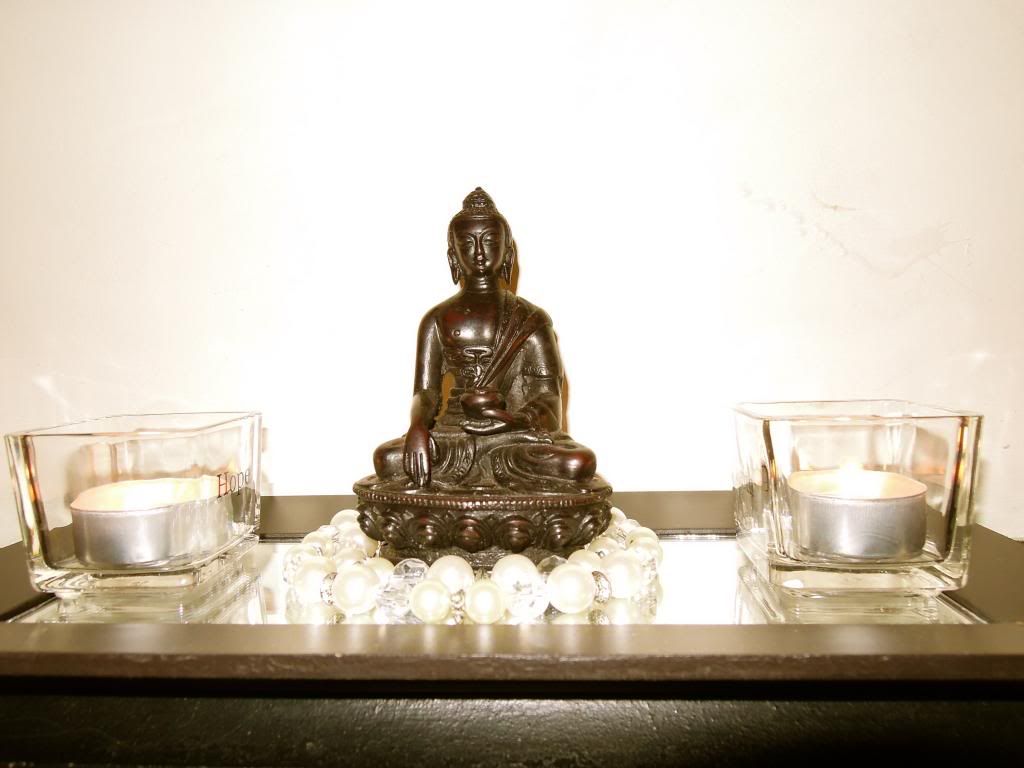
     Gazing on an image or statue of the Buddha is a way of reminding ourselves of this fundamental truth. It focuses our minds and reminds us of the basic fundamental truths of life, one of which is that suffering is inevitable and part of the human condition. The value of gazing upon the Buddha lies in the other parts of that truth which tell us that there are origins of suffering and that we can alleviate suffering by addressing the origins. This is all bound up with our thoughts. We can start to address this with in depth meditation and using techniques to calm our minds we can start to address any imbalances we have in our fundamental understanding of this philosophy.

     Although we don't have the power to control our lives we do have the power to control how we feel about them. It's possible to be in the best job, the most idyllic habitat, in a beautiful relationship and still be unhappy - because you want the latest car or you're in love with an imagined scenario of how it would be to have an affair with your neighbour... or because you're worried about whether the momentary state will continue tomorrow, next week, or next year.

     It's also possible to be in the most terrible state and still be happy. My own father was a prisoner of war in Japan for three and a half years during the Second World War. His stories are not a topic for discussion here but the inspirational example of how he used that experience to develop himself is a great lesson to me. He never resented his guards or his captivity and in my experience he never showed any bitterness towards the Japanese at any point in his life, despite suffering Parkinson's Disease for nigh on 30 years, possibly as a result of some of his malnutrition and illness during his captivity.


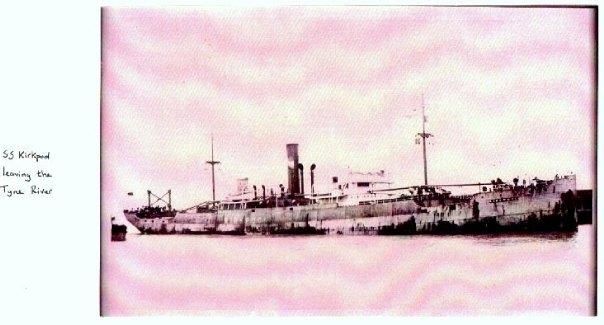
     Instead of emerging  as a vessel of resentment and bitterness after being a prisoner from the age of 16 until he was 20 years old he emerged with a profound sense of direction and faith and he also had linguistic skills and a musical education he'd never dreamed of before enlisting in the Merchant Navy! The iron ship, the SS Kirkpool, on which he'd sailed the oceans, and its very dramatic sinking on 10th April 1942, was a very real reminder of the fact that nothing in this life is permanent.


     He never lost this attitude to life. It's a lesson to me. Now that he has gone and all that remains of his experiences, his suffering, his pain and his unbeatable positive attitude to life is the memory that I preserve inside my own head, I realize that the state of suffering, the "how" we eventually arrive at the moment of our death, is a temporary state in itself and will eventually pass. It doesn't matter what we believe. Our death is the only certainty in life and once that becomes an integrated truth the perspective of our existence changes somewhat.

     This is not a depressing thought. On the contrary, it's an uplifting and liberating thought. It encourages us to make the best of what we have right now. It stops us hankering after objects and desires that may never become a reality. And it liberates us from the slavery of worrying about states that will certainly not last forever.


     We would be mad not to pursue our hopes and dreams or to seek pleasure in this life. That is the purpose of our existence - to express the creative potential that the Universe intended for us. But the fundamental truth is that our role is to alleviate the suffering of all living beings, starting with getting our own minds in order. The understanding that we only exist in a temporary state is possibly the first step to releasing our grip on the fears and emotions that are governed by the illusion that all this is permanent.

     Things will change. Sometimes they'll change for what we will welcome as better. Sometimes they'll change for what we mistakenly believe to be worse. But change they will and when they do it will only be a matter of moments before they change again.

Sunday, 5 May 2013

The Serenity of Feline Company

     For a while back there I used to have time to meditate for hours on my own. I'd go to my treatment room, where I use Tibetan singing bowls, study, read and relax, and then just find a comfortable position to sit alert and focusing on my inner state. It was quite idyllic and I was quite spoilt. So spoilt, in fact, that when a cat adopted me (yes, you read that the right way around) I found myself suddenly having to adjust my habits and patterns to accommodate a new kind of behaviour.


     We live in such a busy world that it's unusual to find a situation where you can meditate without distractions. Having become accustomed to the silence of West Cork in Ireland and the almost uninterrupted view of fields and mountains, I first found the attention my new feline friend was giving me a bit intense. She loves to sit on my lap of an evening and somehow, to her, the logic of me shutting myself away in a room where she couldn't get access to my strokes and cuddles just didn't make any sense.


     In the midst of my silent meditation I could hear her scratching at the door to come in. When I called to her to stop, she mewed at me in such an incriminating manner that I had to relent and let her in. My original plan had been never to let her into this sanctuary. This was supposed to be a pet free place where visitors who wanted soothing meditation could relax without the overtones of a 'mad cat person' intruding on their inner peace. So what? It would mean having to use the hoover a little more conscientiously before a session. It was a small price to pay to satisfy Pusia and restore some of the former inner balance. She ventured into the room with some trepidation at first (the first time I played the bowls she looked at me like I was a mad man and ran for cover).


     From an animal's point of view, there must have been so many new, exotic and interesting smells. My equipment is brought from the farthest reaches of the Asian world and some of it originates from the incense laden atmosphere of Buddhist monasteries. I watched with interest as she explored, sniffing and jumping at every little creak and crack she heard.

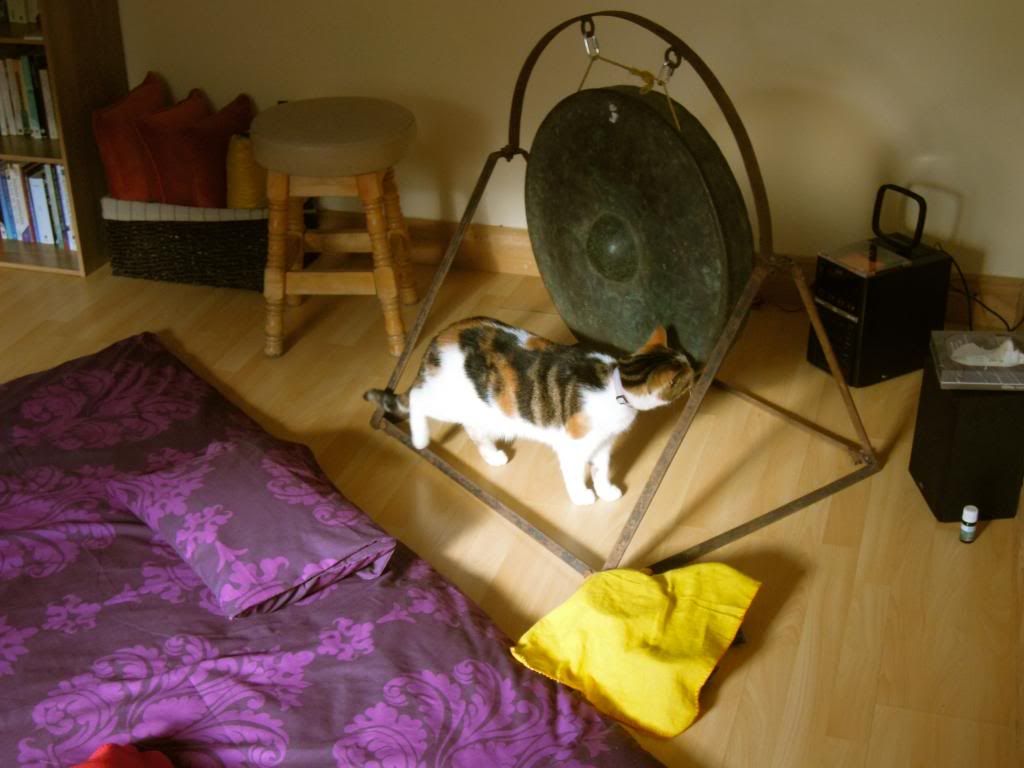
     And then I realized what a great teacher she is. Every moment of anxious shock at a new noise or unexpected movement such as the gong swinging backwards and forwards was greeted with a moment's statuesque type risk assessment and then, once assured there was no danger, a few gestures of absolutely defiant composure such as licking herself or looking nonchalantly around at nothing in particular. It was a very practical example of living in the now. 

     I decided it would do no harm to let her explore further while I meditated. She was, after all, quite content and quiet as long as she was in the same room as me. But then something very magical happened. Quite contrary to being a distraction, Pusia became the focusing force of my attention.

     As I sat down to meditate she stopped her exploration of the room and its contents. As if it was the most natural thing in the world she wandered up to me and curled up in my lap where I sat in a relaxed but alert state. She didn't purr or meow but stared at me and steadily met my gaze. We sat like this for a while as she performed periodic gymnastics before she settled into a comfortable position. Then we spent 20 minutes or so like this for the duration of my calm meditation.

     She wasn't a distraction and she remained perfectly calm until the end of the meditation. Then she got up, arched her back and stretched her legs and wandered off again on, no doubt, important cat business. 

     This episode reminded me that we can't really develop our spiritual practice in isolation. In order to grow and to practise  love, empathy and compassion we have to relate to another living entitiy, human or animal. Pusia made me realize that instead of reducing my contact with the external world to promote my meditational practice it's time to start reaching out again. It's the only way to create the Dharma we need to develop.

Friday, 3 May 2013

Good Things Come to Those Who Wait


     This is a phrase that's bandied around an awful lot of the time. I even saw a joke post on Facebook the other day where someone had vandalized a postcard with this caption, scribbled out "wait" and replaced it with "work bloody hard!" So, is it even true?

     It's certainly true that we don't get anywhere by lying around in bed all day. And it's equally true that in order to achieve most of our significant goals we need to formulate plans, set goals and (as Tony Robbins of Unleash the Giant Within would put it) exert massive and persistent effort. All these things are guaranteed to help propel you towards your aim. If nothing else they help prepare a state of focus and give your subconscious the impression of moving forwards. That's never a bad thing.


     But there is an awful lot of positive writing around these days about meditating and creating the mindset that makes things happen. This seems a little passive. This is where things start becoming a bit "chicken and egg" like. What comes first? Does the thought create the physical object or does the physical object exist and elicit the thought? Is it even possible that a thought can create anything?


     I don't think anyone can answer that question definitively apart from relating it to their own experience. Have you ever noticed how if you set your heart on something, suddenly there are masses of that one thing around. Or if you "put it out there" in the Universe that you want something to happen that suddenly opportunities and coincidences start to appear almost as if the very thought conjured them into existence.


     Whether it's coincidence, attraction or a heightened state of awareness that creates the illusion that there are more incidences of a desired thing in your life, one thing is true. Results do start to happen when we "set our mind" to something.


     I used to play a game when I went shopping in the car. I thought of the parking space I wanted and drove to the store. Nine out of ten times the one I had visualized was actually vacant or a car pulled out of it just as I arrived.


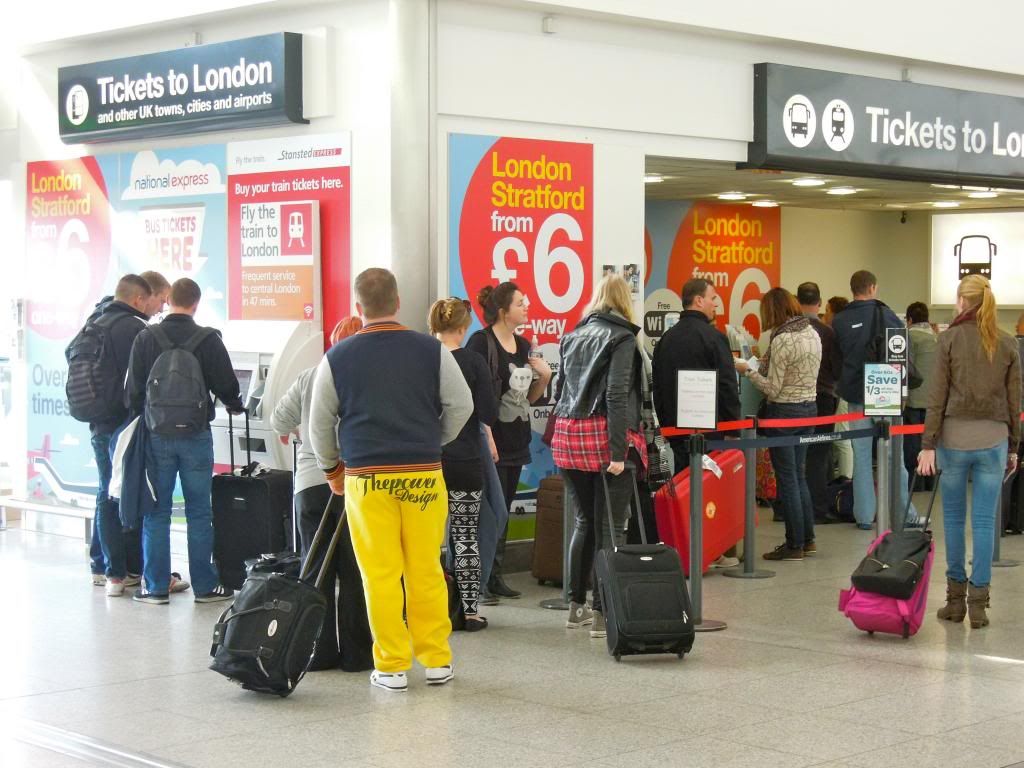
     Today I arrived at Stansted Airport to pick up a rental car. I looked at the queue and decided that grabbing a coffee after my flight was a better option. As I had my coffee I thought, wouldn't it be cool if all of my class of car was gone by the time I finished my coffee, joined the queue and arrived at the counter? One thing all the New Age philosophies are clear on is that to achieve these goals using these techniques you have to focus your mind. This is the purpose of using something like a vision board so that you have a real point of focus and somewhere tangible and measurable to direct your efforst. So I set about it using the kind of mantra and mind calming techniques I use with Tibetan Singing bowls


     I entered a calm state (not hard given that I'd been travelling since 4am) and opened my mind to the possibilities that such focusing energy could have. And then the trick is to relax. As Barbel Mohr says in her book The Cosmic Ordering Service, if you were to keep bugging the Customer Service department for the thing you want then you'd probably only succeed in irritating them. So just let go!


     Guess what... No sooner was I at the counter than I was told they had to upgrade me because only the higher class of car remained. There would, of course, be no extra charge. So, it seems, at least sometimes good things come to those who wait.

Monday, 29 April 2013

Familiarity breeds confusion...

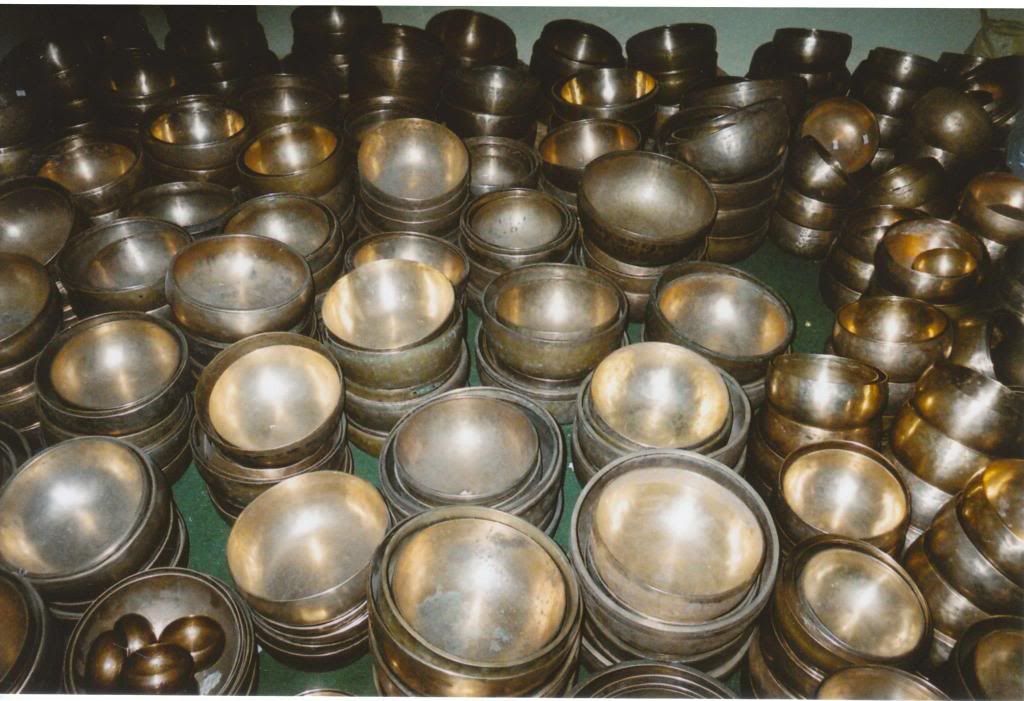
     Well it's not like I haven't used the bowls before. For about three years I've worked with autistic children and young adults, intuitively using the bowls to address various issues and create an environment which is conducive to healing and relief from their normal day-to-day tormented world. It was this experience which encouraged me to pursue the whole subject and travel to Nepal to study with a Tibetan master. We studied, ate, and meditated together.

     After returning from Nepal armed with a whole array of layouts and different approaches to various complaints ranging from a stiff neck to anxiety I started introducing the bowls and their uses to a gang of friends. You'd think this would help but, actually, it just started throwing up a whole load of new questions.


    This is particularly true when you start to meet people who have their own experiences and views on all things, religious and spiritual. In all, the process of learning never stops. And that's what's so wonderful about working in this area. Every day I learn to use the bowls in a different way and every day I'm refining my practice.


    And every day I'm finding some new adornment or development in my own Dharma practice...